A Film-Night Checklist for Medical Symbols in Casino Scenes
Use this film-night checklist for medical symbols in casino scenes to trace military care, props and movement, while separating visible film choices from guesses.
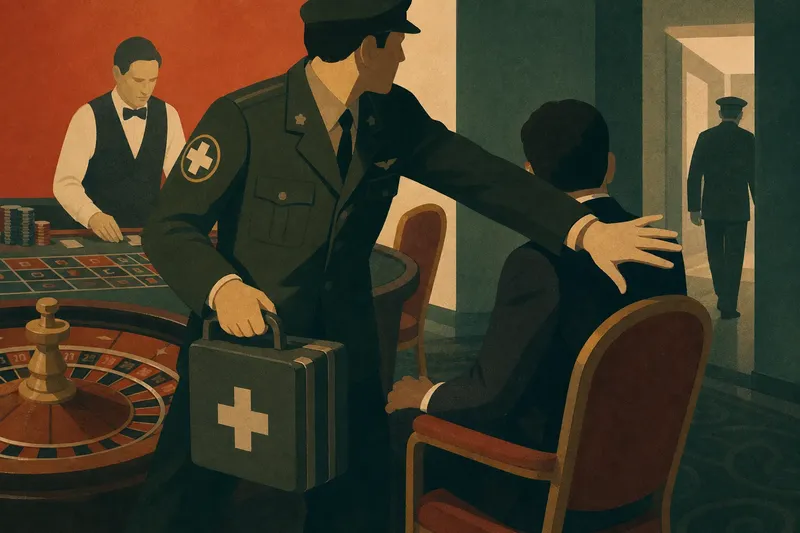
The most common film-night mistake is treating a medical-looking prop as proof of what is happening before the scene has finished. A film-night checklist for medical symbols in casino scenes can instead reveal how a film stages military care, authority and interruption without confusing dramatic imagery with medical fact.
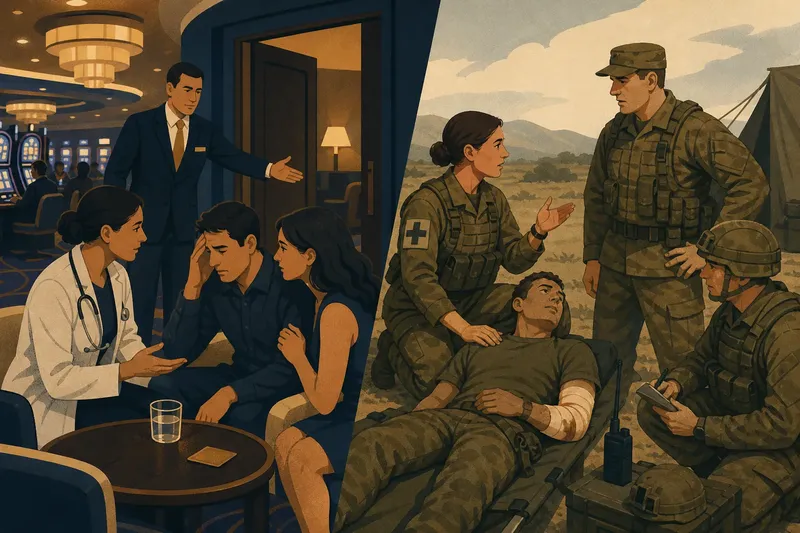
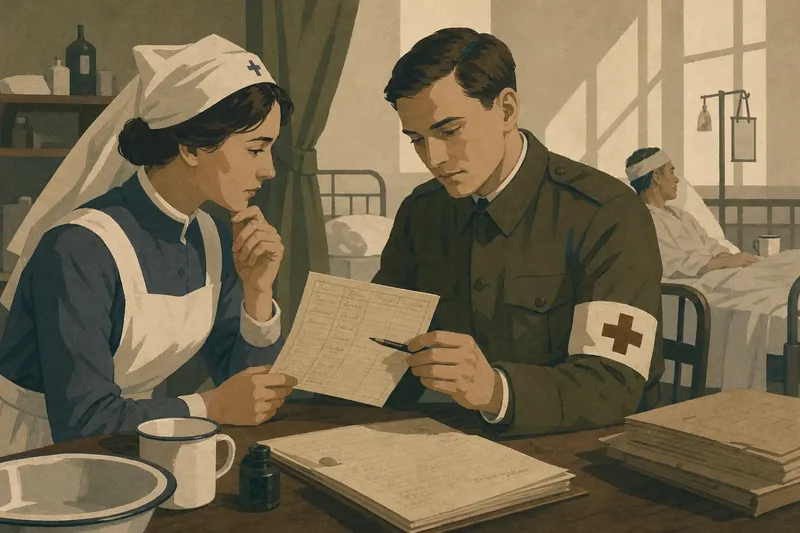
Watch the scene once without pausing, then replay it to follow who moves, who yields space and where the action shifts. If the story invokes a uniformed medic, military service or an emergency, note how the film presents those details as part of its fiction—not as guidance on real medical care.
Track the military and casino details on screen
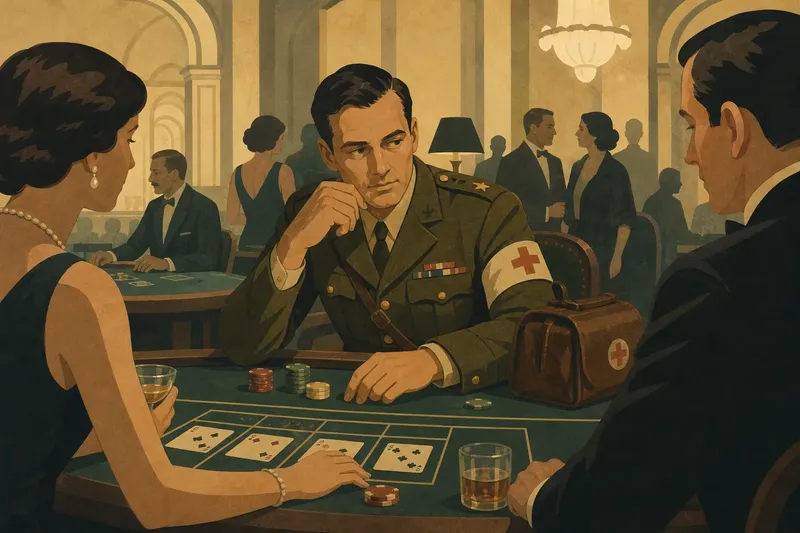
Use brief notes tied to visible moments. Military dress, insignia, a case or a spoken reference may connect a character to a service role, but the image alone cannot establish training, authority or the contents of an object.
- Uniform or insignia: Check what is plainly visible and whether dialogue identifies it. If the film names a military role, record the wording; if not, describe the clothing without assigning a rank or qualification.
- Medical-looking object: Check its shape, position and use in the scene. If a character names or handles it in a clear way, note that evidence; if its purpose remains unclear, leave its function open.
- Access to the action: Check who approaches, steps aside or blocks another person’s view. If the scene shows someone being admitted or held back, describe the movement; if it does not, avoid inferring permission or authority.
- Casino activity: Check whether cards, chips, a roulette wheel or staff continue in the background. If the activity carries on, note the contrast; if it stops or leaves the frame, record that change instead.
- Sound: Check whether dialogue, music or casino noise changes around the military or medical cue. If a sound shifts, note when; if it stays steady, do not assign the prop responsibility for the mood.
- Reaction: Check what nearby characters visibly do. If someone turns, speaks or moves away, record the response; if no response is shown, leave their awareness unknown.
Follow how movement interrupts casino routine
A hand crossing a roulette layout, a chair pulled back or a uniformed character entering the frame can interrupt the scene’s repeated motions. Describe the order of those actions before deciding what the film may be suggesting.
Notice what continues alongside the interruption. If dealers keep working while one character attends to another, the film places routine beside a personal event; that contrast can create tension, but it does not establish how a real casino or military medical team would behave.
Read boundaries as part of the staging
A table edge, doorway, rope or ring of onlookers can divide the people shown in a scene. Like chairs around a kitchen table, those positions help define who is included in the visible exchange and who remains outside it.
In a story about military care, a corridor or private room may also change what the viewer can see. Record the location shift and its effect on the frame, but do not treat a change of setting as proof of what care is provided off-screen.
Which details support a careful reading?
Does a uniform establish a character’s medical role?
Not by itself. Use dialogue or clear action as evidence for the role the film assigns; otherwise, describe the uniform without inferring a qualification.
Can a prop establish that medical care is taking place?
Only if the scene identifies or clearly uses the object in that way. A case or device that merely looks medical leaves its purpose uncertain.
What does a blocked view tell the viewer?
It shows that part of the action is hidden from the audience and may alter who seems to control the space. Whether the character is shielding someone, concealing an event or simply crossing the frame depends on other visible cues.
How should I read an off-screen action?
Note where the film cuts away and what remains in view. Leave the unseen action unresolved unless a later image or line of dialogue clarifies it.
Work through an invented scene in sequence
Imagine an invented scene beside a roulette table. At the start, a closed case sits on a chair, one character wears a jacket with a visible military-style badge, and a seated guest is in view. The character lifts the case to the floor, another person steps between the guest and the table, the dealer continues dealing, and the film cuts to a corridor.
On the first viewing, record the starting arrangement: one case on one chair, one visible badge, one seated guest and one dealer. On the second, list the actions in order: the case moves from chair to floor, the view of the guest is blocked, dealing continues, and the scene cuts away. The concrete reading is that the film places a military-looking cue and an obscured guest beside continuing casino activity. The badge does not identify the character’s medical training, the case’s contents remain unknown, and the cut leaves the guest’s subsequent care unresolved.
Separate the film’s evidence from its implications
Sort notes into two groups: what the camera and soundtrack show, and what those choices might suggest about privacy, authority or interruption. Keep the second group provisional, especially when military medicine is implied through costume or props rather than dialogue and action.
This film-night checklist for medical symbols in casino scenes helps you describe how military care is represented without treating fiction as a record of practice. The most useful final note is often the boundary of the evidence: what the film makes visible, and what it leaves outside the frame.