The Field Surgeon at the Baccarat Table as a Screen Character
Field surgeon at the baccarat table: read costume, dialogue and game play separately to see how a story builds tension without turning a wager into care.
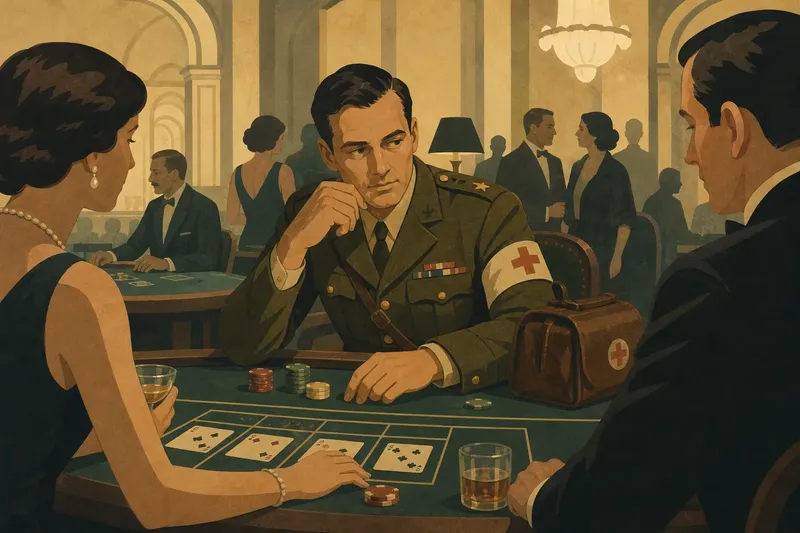
The most common mistake in reading a field surgeon at the baccarat table is to assume the uniform explains both the character’s work and the scene’s meaning. It costs the viewer a more interesting question: how does the story make military medicine and a game of chance rub against each other? The phrase “field surgeon at the baccarat table” is less a claim about clinical accuracy than a setup for a clash of roles.
The table turns professional identity into a dramatic choice
A field surgeon belongs to a story’s military setting; baccarat places that character in a social space governed by wagers and uncertainty. The contrast can expose how the character carries a professional identity into private life, without suggesting that medical judgement can predict a hand of cards.
Pay attention to the character’s purpose at the table. They might be trying to impress another player, escape a difficult conversation or hold on to a sense of control. Those motives shape the scene’s tension more than a medical bag does.
A prop is like a book cover: it signals a subject, but cannot tell you what the pages contain. A medical bag may mark a character as connected to healthcare; the story still needs dialogue and action to establish what that connection means.
Costume, dialogue and gesture create different meanings
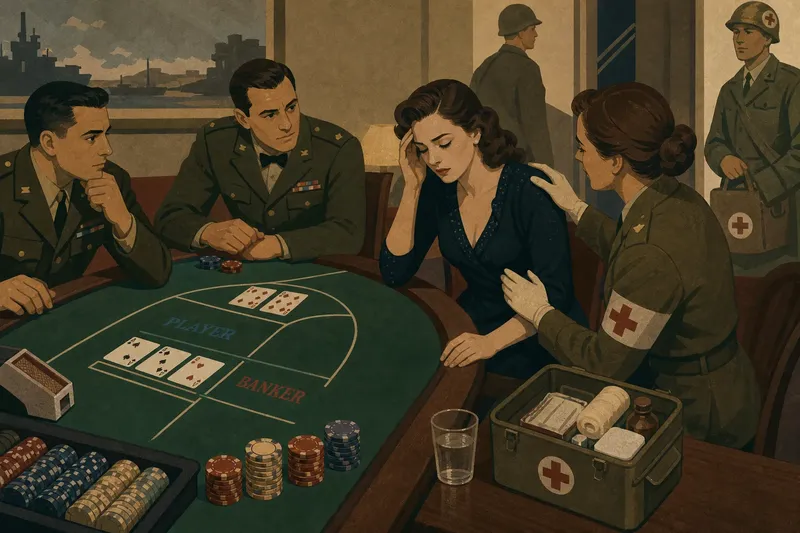
A service uniform can place a character within a military world, while a stethoscope or medical bag points towards healthcare. These are visual cues, not a complete account of the character’s duties. The story may deliberately leave those details unsettled.
Dialogue can reveal how the character thinks. A question about what happened, a pause before answering or an admission of uncertainty may show restraint. At a baccarat table, the same habits can serve as social tactics: the character may be listening carefully to an opponent rather than assessing a patient.
Gestures also change meaning with their setting. A character handling a glass, watching another player’s face or reaching for a medical bag can suggest confidence, distraction or performance. The scene’s framing and the reactions of other characters help determine which reading feels plausible.
Baccarat gives the character a different kind of uncertainty
Baccarat is a card game played by its own rules. Its uncertainty belongs to play and wagering; a medical decision concerns a person and depends on relevant information about their condition. A story can place these uncertainties side by side, but they are not interchangeable.
That difference offers a useful source of character conflict. A surgeon may be comfortable making decisions in a clinical role yet uneasy when there is no duty to guide them at the table. Or they may use professional authority to persuade another player, revealing a personal motive rather than a clinical insight.
Say a fictional scene begins with a player rubbing their wrist after handling a glass. The surgeon asks whether it hurts; the player says it does not. The surgeon then returns to the game rather than drawing a conclusion from the gesture. What viewers can observe is a question, an answer and a choice to leave the matter there—not a diagnosis or a way to read the cards.
Read the scene through its social stakes
Instead of treating the scene as a test of medical procedure, ask what the character risks by acting like a surgeon at the table. They might interrupt a wager to offer help, stay silent to protect their standing or use a medical title to command attention. Each choice gives the role a different relationship to power.
Editing helps shape that relationship. A close-up of a hand followed by the surgeon’s glance may invite viewers to connect the two, while another character’s reaction can make the glance seem intrusive or reassuring. The cut directs attention; the surrounding dialogue and consequences give the moment its social meaning.
When describing the portrayal, name the kind of claim you are making. “The scene presents the surgeon as watchful” describes characterisation. “The character’s choice changes how the other player responds” describes dramatic effect. Neither statement needs to claim that a clinical decision has been demonstrated.
What questions help interpret the scene?
Does a uniform establish that the character is a field surgeon?
It establishes a military appearance, but the story needs other cues to clarify a medical role. Dialogue, duties shown on screen and the character’s relationships can fill in what the costume leaves open.
Can a casino scene reveal professional habits?
Yes. Listening closely, waiting before speaking or resisting a quick judgement can shape the character’s behaviour at the table. These habits develop the performance without turning a wager into patient care.
Why put a surgeon in a game of chance?
The contrast can place control, risk and authority in the same scene. The game gives the character a setting where professional status may carry less weight than it does at work.
How can a writer keep the medical role from becoming a shortcut?
Give the character a purpose in the scene beyond displaying a title or prop. Let the choices at the table reveal something about their social position, private motive or relationship to uncertainty.
Which details should guide your reading?
Use the scene’s concrete details to decide what kind of interpretation they support. Each observation can point towards a different description, rather than a single verdict about the character.
- Check the uniform: if it shows military affiliation but no duties, describe the setting; if the dialogue names the role, describe the role the story assigns.
- Check the equipment: if a bag or stethoscope is only displayed, treat it as a visual cue; if the prop is used, describe the action and its effect in the scene.
- Check the dialogue: if the character asks a question and receives an answer, note that exchange; if the character makes a claim without explanation, describe it as the character’s assertion.
- Check the gesture: if a movement has several plausible meanings, keep the interpretation open; if another character responds to it, include that response in your reading.
- Check the table’s rules: if the scene shows a wager or card play, discuss it as part of the game; if a character links the game to medical authority, examine that link as dialogue or persuasion.
- Check the edit: if a close-up is followed by a decisive line, describe the connection the film invites; if later dialogue complicates it, account for that complication.
- Check the consequence: if a choice changes the exchange between characters, discuss that shift; if no consequence is shown, avoid assigning the moment a larger effect than the scene supports.
How can a worked scene change the interpretation?
Imagine a fictional scene starts with two players, one marked by a military uniform and the other holding a glass. The second player rubs a wrist; the uniformed character asks, “Does it hurt?” and hears, “No.” The character then places a chip on the table and returns attention to the game. The sequence gives viewers an observable exchange and a choice to continue playing; it does not establish the character’s exact medical duties or turn the gesture into evidence about the wager.
If the other player later says, “You only asked because you wanted me to keep playing,” the scene’s centre shifts from professional care to trust and persuasion. If instead the player thanks the character for checking in, the same brief exchange can read as attentiveness within a social encounter. In either version, the audience can discuss what changes between the characters without treating the scene as a guide to medicine.
For questions about real health, speak with a qualified medical professional rather than relying on a fictional portrayal. For the screen character, the field surgeon at the baccarat table is most revealing when you read military identity, social behaviour and the game’s uncertainty as separate parts of the scene.