How Military Hospitals Shape Medical Characters in Fiction
Military hospital fiction feels more convincing when period-specific records and ward details shape what characters can know, ask and decide in a scene.
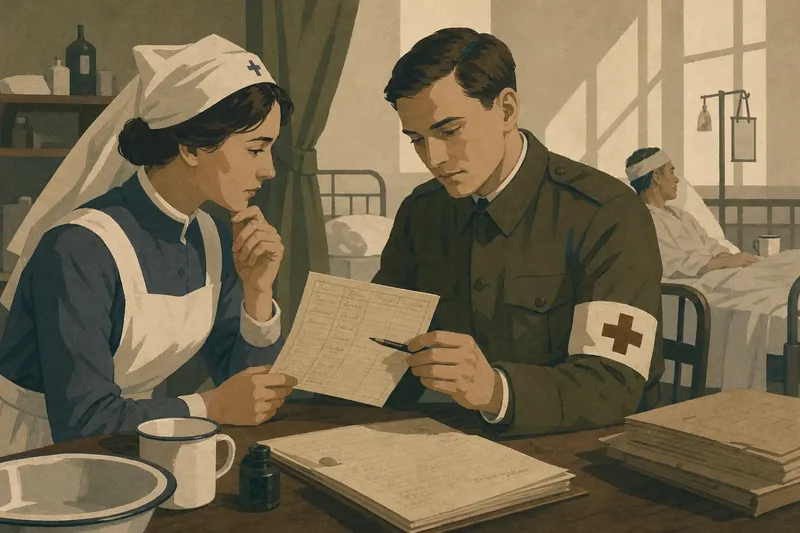
The common mistake in military hospital fiction is to use a ward as generic scenery; the cost is a scene where neither the setting nor its routines affect what anyone can know. A record, room arrangement or job title becomes useful when it gives a character a reason to act, pause or ask a question.
Because military hospitals differ by service, place and era, a detail that fits one setting may mislead in another. Choose the scene’s historical frame before naming its people, paperwork or equipment.
Choose the setting before naming its details
Begin with the service, location and period required by the story. Then decide what the scene needs the reader to understand: who is present, what information reaches them, or what stands in the way of a conversation.
Use a small set of details that serve those purposes. A ward’s layout might affect who can overhear an exchange; a record might show what was written down and what was left out. Period detail is like a label on a drawer: it helps only when it accurately identifies what is inside.
Check records and equipment against the chosen setting
Records can shape a character’s knowledge, but their format and terminology need to suit the setting. Do not assume a modern chart or handover process existed in the same form in an earlier period. Look for material tied to the relevant service and era, such as an archive catalogue, an official manual or a contemporary account, and verify that it supports the specific detail you plan to use.
Give each piece of equipment a narrative job. Ask what it is, who handles it and whether the character’s action depends on a particular historical claim. If the object’s availability or use is central to the plot, confirm it before building a turning point around it; otherwise, leave it out or describe only what the scene requires.
Say you are planning an invented scene in a British military hospital in 1916, and you have no verified record terminology yet. Start with one planned ward, two speaking characters and a record entry that they need to discuss. Search an archive catalogue and period service material for a record format connected to that setting; if a source supplies a term, check that it refers to the relevant document and context before using it. If you cannot verify a term, write “record” in your draft and make the dramatic action the character’s request for clarification. The observable result is a scene that can proceed without presenting an unverified modern label as historical fact; the trade-off is less period-specific wording until the detail is confirmed.
Let routine decisions reveal character
A routine action can show how a character thinks when it changes what they understand. Reviewing an entry, asking who recorded an observation or admitting that a note is unclear can reveal judgement without turning the scene into a speech about professional virtue.
Keep the patient present as a person with preferences and responses, not merely as evidence of a clinician’s skill. A patient might ask for an explanation or object to a proposed action, changing the conversation’s direction. For portrayals of real conditions or treatment, seek review from an appropriately qualified medical professional.
Which details deserve attention during revision?
Which details should be checked first?
Check details that could change an action or the reader’s understanding, such as a job title, a record term or a named object. If a detail is plot-critical, verify it against material relevant to the chosen service and period; if it is decorative, remove it or keep it general until you can support it.
What should I do when sources use different terms?
Check whether the sources refer to the same service, place, period and kind of document. If the difference remains unresolved, use a broader description in the scene rather than assigning one disputed term to a character.
How can a record create tension?
Give the record a specific omission or unclear entry that limits what a character can conclude. The character can ask who made the note or seek clarification; if the scene needs a definite answer, add one only when the story’s evidence supports it.
How can a patient retain agency in a ward scene?
Give the patient a question, preference or response that affects the exchange. If the patient’s contribution does not alter what happens next, revise the interaction so the person’s words or choices have a visible place in it.
Use a final check to keep details purposeful
- Check whether the service, place and period are established; if they are, choose details that match them, and if not, define the setting before naming equipment or roles.
- Check whether a job title is supported by a source for that setting; if it is, use it, and if not, use a broader role description or verify the title before publication.
- Check whether the record term names the right kind of document; if it does, retain it, and if not, use “record” or seek a more relevant source.
- Check whether an object’s use changes the plot; if it does, verify its presence and function, and if not, remove the specific claim or describe the action more generally.
- Check whether the ward layout affects what a character can hear or see; if it does, keep the relevant spatial detail, and if not, simplify the description.
- Check whether the patient’s preference changes the interaction; if it does, let that choice remain visible, and if not, revise the exchange to give the patient a meaningful response.
For military hospital fiction, the strongest period detail is often the one that changes what a character can reasonably know at that moment. Keep the verified detail that shapes the scene, and let the rest of the ward remain quiet background.